Cutting-Edge Approaches to Quantify Particle Surface Texture Using Ima…
페이지 정보

조회 3회 작성일 26-01-01 02:17
본문
Measuring the surface roughness of particles is a fundamental aspect of pharmaceuticals, where the surface properties of surfaces directly influence behavior, reactivity, and movement in complex systems. While conventional techniques such as AFM provide valuable insights, digital surface analysis platforms now enable more precise, high resolution, and consistent quantification of surface roughness at the micrometer and nanometer levels. These techniques integrate fine-scale visualization with advanced data processing to extract numerical parameters that account for spatial variance, mapping the detailed microstructure of particle surfaces.
One of the most powerful approaches involves SEM combined with computational image processing. High resolution SEM images highlight surface features at resolutions down to the atomic scale, allowing researchers to visualize microscopic depressions and elevations that are beyond optical diffraction limits. When paired with robust computational platforms, these images are transformed into three dimensional topographic maps. Processing scripts calculate topographical indices such as Rz, the maximum profile height, computed across various zones of the particle surface to guarantee data validity, mitigating spatial inhomogeneity.
Confocal laser scanning microscopy offers another non-contact method suitable for optically clear or translucent materials. By directing a laser spot across the surface and detecting backscattered photons at stacked optical sections, this technique reconstructs a detailed 3D surface profile. It is ideal for environments where sample preparation must be minimal, making it especially effective for bio-nanomaterials or delicate nanomaterials. The generated outputs allow for the calculation of complex texture metrics including asymmetry factor and peakedness, which describe the asymmetry and height concentration, respectively. These parameters are particularly useful in modeling surface interactions with fluids or other surfaces in dynamic systems.
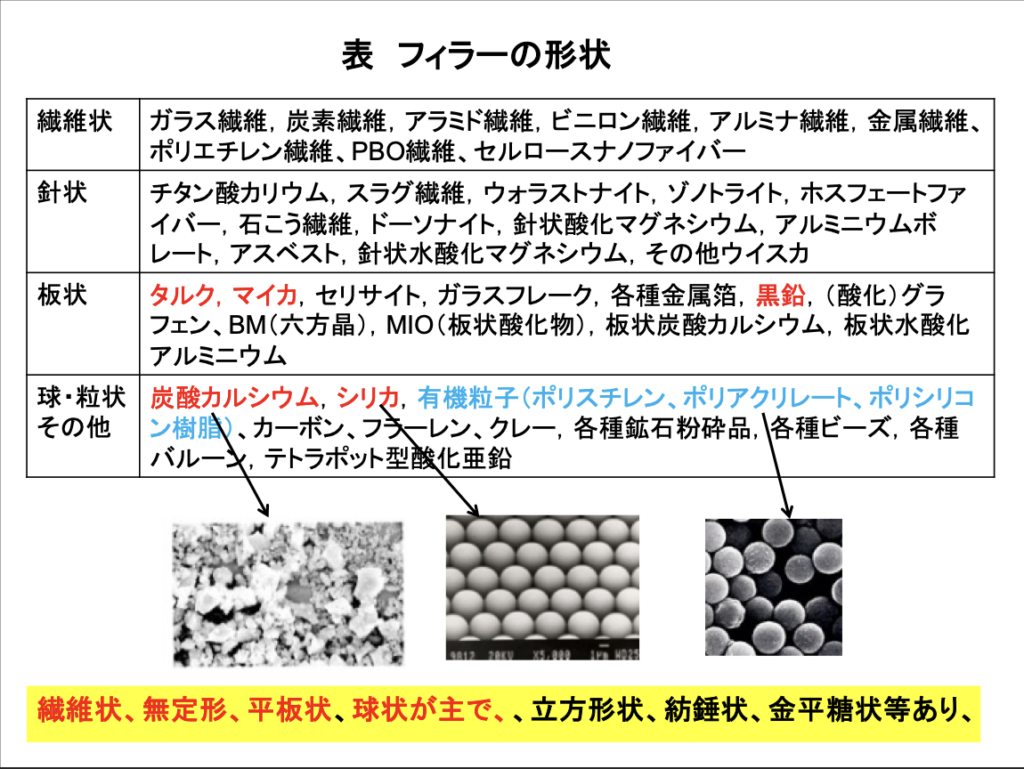
In recent years, OCT has emerged as a viable option for in situ roughness measurements, especially in continuous operation systems. Unlike vacuum-dependent systems that require sample coating, optical coherence tomography can work in normal laboratory settings and provides high-speed acquisition with 1–5 µm detail. When integrated with AI-driven classifiers, it can generate real-time roughness scores across bulk samples in on the fly, enabling production monitoring in scaling operations where consistency is paramount.
A key innovation in this field is the implementation of machine learning segmentation and computational pipelines. These pipelines enhance contrast between objects and surroundings, detect localized textures, and apply standardized roughness metrics across multi-component samples. By analyzing thousands of particles in a unified measurement, researchers obtain population level statistics rather than relying on localized probes, which significantly enhances the experimental confidence and consistency. Moreover, associations of morphology to function can now be determined more reliably for drug release kinetics, adhesion strength, or surface reactivity.
It is important to acknowledge that the tool selection depends on particle size, 粒子形状測定 material composition, and the required precision. For instance, while SEM yields fine features, it may introduce charging artifacts on insulating materials unless metalized. Confocal microscopy may be ineffective for dark or light-blocking materials. Therefore, a multi-technique protocol is often encouraged, where complementary imaging methods are used to enhance consensus and ensure holistic evaluation.
As processing capabilities and image analysis algorithms continue to improve, the ability to extract meaningful, actionable data from topographic scans will only improve. Upcoming advances are likely to incorporate ML models for instant defect identification, simulating interaction outcomes, and automated generation of comprehensive roughness profiles tailored to specific applications. This will not only accelerate research and development cycles but also support the engineering of smart surface architectures with optimized texture characteristics. In this context, advanced imaging techniques are no longer just analytical devices—they are core drivers of discovery and precision in the science of particle surfaces.
- 이전글sbobet ทางเข้า 789bet 26.01.01
- 다음글Mastering Cosmetic Uniformity by Monitoring Particle Morphology 26.01.01