Learn How To Handle ZFX Files With FileViewPro
페이지 정보

조회 31회 작성일 25-12-02 23:08
본문
A .zfx data file is most commonly a proprietary ZipForm data container that stores real-estate transaction information. Here, .ZFX bundles together the key details of a deal—buyers, sellers, property, prices, dates, and more—so ZipForm can reuse that data across many related forms with minimal re-entry. The file also stores page layouts and other form-related settings, effectively packaging both the content and how it is mapped into the various real-estate forms that ZipForm can generate or update. A few legacy catalogs list .ZFX for a CC3 packer utility, but in modern practice almost all .ZFX files you encounter will be ZipForm transactions Because .ZFX is a specialized data container rather than a simple document or generic archive, it is best opened in ZipForm itself, while a multi-format viewer like FileViewPro can help recognize the extension, identify it as ZipForm data, and—where supported—let you inspect or export the contents without guessing which application to try first.
A compressed file is special file containers that shrink data so it is faster to move, store, and share. Fundamentally, they operate by analyzing patterns and redundancy in data and then representing that information in a more efficient way. This allows users to pack more into the same disk space or send large sets of files faster over the internet. One compressed archive might hold just one file, but it can just as easily wrap entire project folders, media libraries, or application setups, all wrapped into one smaller file than the originals. Because of this versatility, compressed formats appear everywhere, from software downloads and backups to email attachments, game resources, and long-term data archives.
Compressed archives only became practical after key breakthroughs in compression theory and widespread adoption of home and office PCs. Early on, academics including Lempel and Ziv created methods such as LZ77 and LZ78, proving that you could spot repetition in a data stream, store it in a shorter form, and still rebuild every bit exactly. Those concepts evolved into well-known algorithms like LZW and DEFLATE that sit behind the scenes of many familiar compressed files. In the late 1980s and early 1990s, developers like Phil Katz helped bring file compression to everyday users with tools such as PKZIP, which popularized the ZIP format and established a simple way to bundle and shrink files on early systems. Since then, many alternative archive types have appeared, each offering its own balance of speed, compression strength, and security features, yet all of them still revolve around the same core principle of compact packaging.
On a technical level, compressed files rely on one or more algorithms that are usually described as lossless or lossy. Lossless approaches keep every single bit of the original, which is critical when you are dealing with applications, spreadsheets, code, or records. Common archive types like ZIP and 7z are built around lossless algorithms so that unpacking the archive gives you an exact duplicate of the source files. On the other hand, lossy methods trade some detail for dramatic size savings, most commonly in music, film, and visual content. Whether it is a generic archive or a specialized media format, the underlying goal remains to squeeze out wasted space while keeping the content useful. In most archive formats, compression is tightly integrated with packaging, so you can both reduce size and preserve a complete directory layout inside a single file.
With the growth of high-speed networks and powerful devices, compressed files have found increasingly sophisticated roles. Software distribution is a prime example, where applications are shipped as compressed packages that download quickly and then unpack into their full structure on the user’s device. In gaming and multimedia, massive collections of images, audio, and data can be wrapped into compressed resource files that engines can stream and update efficiently. In system administration and DevOps, compressed archives are indispensable for log rotation, backups, and automated deployment workflows. In the cloud, compression plays a quiet but crucial role in keeping large-scale storage and data transfer efficient enough to be affordable and responsive.
Beyond everyday transfers, compression has become a backbone for serious archival and security-focused workflows. With compression, large historical datasets and personal collections that would otherwise be unwieldy become easy to back up and move. To guard against bit rot or transfer errors, compressed archives often embed mechanisms to confirm that everything inside is still valid. When privacy is a concern, encrypted compressed archives offer an extra layer of defense on top of size reduction. Thanks to these features, compressed archives are now routinely used to safeguard business data, personal information, and intellectual property.
On the practical side, compressed files remove a lot of friction from sharing and organizing information. Rather than attaching every file one by one, you can pack them into one archive and send just that, cutting down on clutter and transmission time. Because the layout is kept inside the archive, everyone sees the same structure after extraction. In many cases, applications and support tools automatically generate compressed files when exporting projects, collecting log bundles, or preparing backups. Learning how to open, inspect, and extract compressed archives has therefore become a basic computer skill, not just something for advanced users or IT professionals.
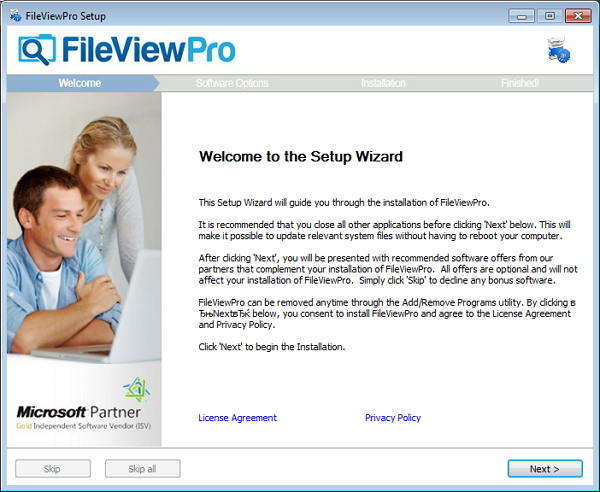
With numerous formats in the wild, it is common for users to run into archives they have never seen before and are not sure how to open. Instead of guessing which program to use, you can rely on FileViewPro to identify and open the archive for you. Rather than installing multiple separate decompression tools, users can rely on a single solution that lets them quickly see what is inside, extract only what they need, and avoid damaging or misplacing important files. If you have any sort of questions concerning where and just how to utilize ZFX file format, you can contact us at our web-page. Whether you are a casual user, a power user, or somewhere in between, tools like FileViewPro take the complexity out of dealing with compressed files so you can focus on the content rather than the format.
In the future, compression technology will keep changing alongside faster hardware and new ways of working with data. Ongoing research aims to squeeze more out of data while still keeping compression and decompression fast enough for real-time applications. At the same time, the everyday purpose of compressed files remains familiar: we still need to move large information through limited connections and keep our devices from filling up too quickly. From personal use to professional environments, compressed archives quietly support tasks that would otherwise be slow, awkward, or expensive. By pairing advanced compression formats with an accessible viewer like FileViewPro, the benefits of smaller, smarter files become available to every user, not just technical experts.