How Polymer Compatibility Drives Advanced Material Design
페이지 정보

조회 4회 작성일 25-12-22 04:39
본문
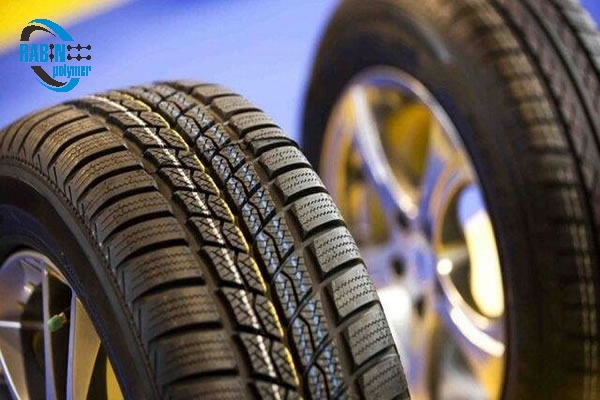
When polymers are combined in a compounding process, their ability to mix and form a stable, uniform material depends on a set of underlying scientific principles known as polymer blending thermodynamics. Not all polymers can be blended together successfully, and understanding why some mix well while others separate is key to developing advanced polymer composites. The foundation of polymer compatibility lies in thermodynamics, particularly the concept of miscibility, which describes whether two or more polymers can form a unified molecular network at the molecular level.
One of the most important factors is the molecular likeness between the polymers. Polymers with comparable backbone types tend to have better compatibility. This is often summarized by the rule of thumb that like dissolves like. For example, two polyolefins like polyethylene and polypropylene may have limited compatibility due to minor variations in branching, but adding a block copolymer mediator—a third component designed to enhance adhesion between dissimilar chains—can significantly improve their interaction.
Another critical factor is the Flory-Huggins interaction parameter, a mathematical value that quantifies the thermodynamic favorability between polymer chains. A negative mixing enthalpy suggests thermodynamically stable blending, leading to homogeneous dispersion. A high value indicates thermodynamic incompatibility, which causes microscopic demixing. This parameter depends on the polymer’s temperature, and even nearly identical backbones may not mix if their molecular weights are too different, as chain entanglement and mobility become mismatched.
Temperature also plays a vital role. Many polymer blends are only compatible within a narrow thermal window. Above a certain temperature, kinetic activation can overcome unfavorable interactions, allowing the polymers to mix. Below that temperature, they may form heterogeneous domains. This is why cooling rates during compounding must be optimally managed to ensure the blend remains homogeneous during mixing and cooling.
Molecular weight and تولید کننده گرانول بازیافتی topological structure further influence compatibility. entangled macromolecules entangle more and hinder diffusion, while branched chains may alter free volume, affecting how well they interact. Additives such as fillers can also shift compatibility by changing solvent-like behavior within the blend.
In industrial applications, achieving compatibility often requires the use of interfacial stabilizers. These are typically multiblock architectures that have tails matching each polymer phase. They act like molecular glue, reducing phase boundary energy and stabilizing the blend against phase separation. Without them, even marginally mismatched chains can lead to weak mechanical properties in the final product.
Recent advances in computational modeling now allow scientists to model phase stability computationally, saving time and resources. These models simulate free energy landscapes based on polymer structure, helping engineers design next-generation composites with enhanced predictability.
Ultimately, polymer compatibility in compounding is not just a matter of mixing ingredients—it is a precise science that balances molecular design and industrial engineering. By understanding the thermodynamic drivers, manufacturers can create performance-optimized compounds for applications ranging from automotive parts to medical devices, all while minimizing scrap and energy use.