Nature Neuroscience. 5 (2): 162-168. Doi:10.1038/nn790
페이지 정보

조회 16회 작성일 25-12-23 19:40
본문
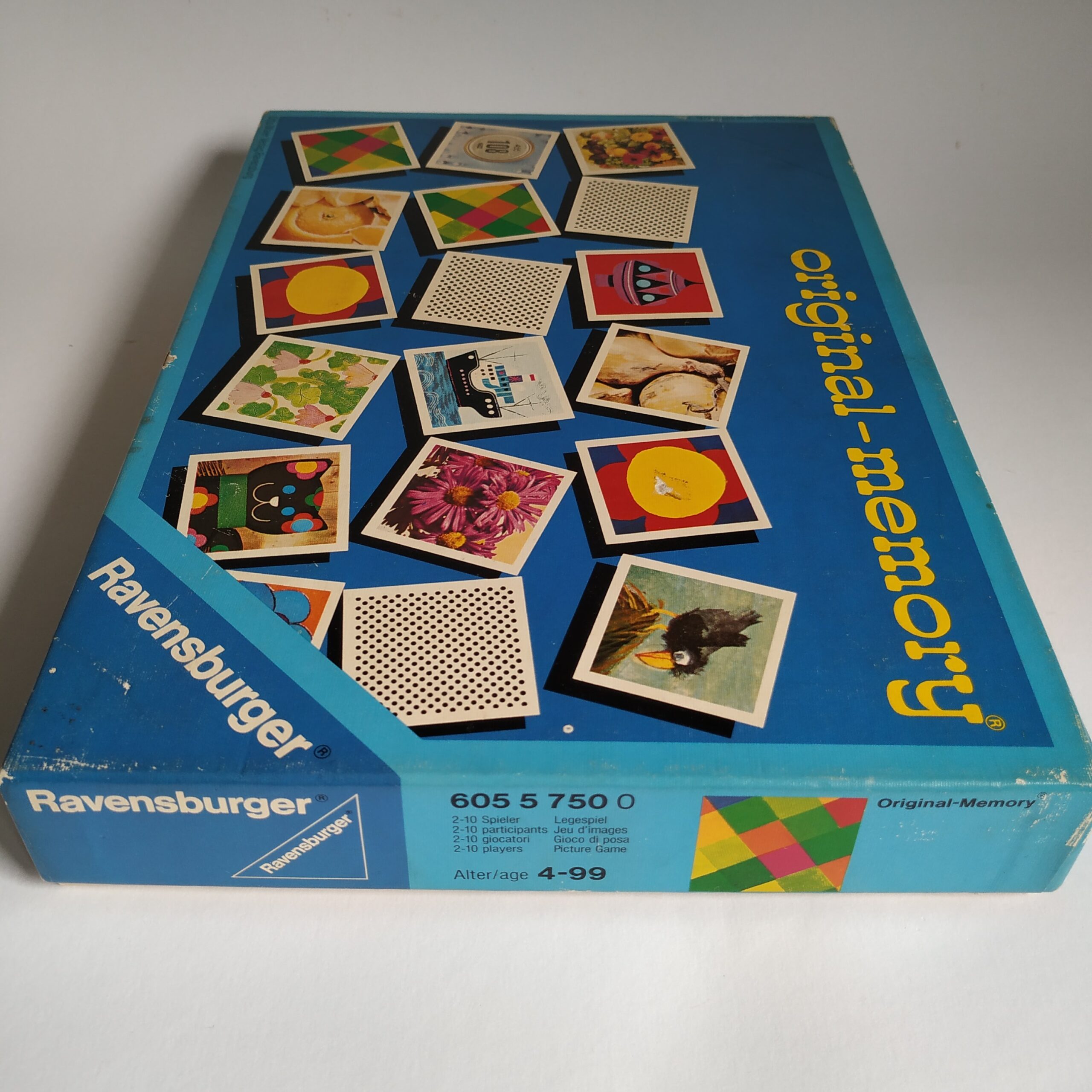 In cognitive psychology and neuroscience, spatial memory is a type of memory responsible for the recording and recovery of knowledge needed to plan a course to a location and to recall the situation of an object or the incidence of an occasion. Spatial memory is necessary for orientation in space. Spatial memory may also be divided into egocentric and allocentric spatial memory. A person's spatial memory is required to navigate in a well-recognized city. A rat's spatial memory is needed to be taught the situation of food at the end of a maze. In both people and animals, spatial memories are summarized as a cognitive map. Spatial memory has representations within working, short-time period memory and long-time period memory. Analysis indicates that there are specific areas of the brain related to spatial memory. Many methods are used for measuring spatial memory in kids, adults, and animals. Short-term memory (STM) may be described as a system allowing one to temporarily store and manage data that is necessary to complete complex cognitive duties.
Tasks which employ short-time period memory embody studying, reasoning, and comprehension. Spatial memory is a cognitive course of that enables an individual to recollect completely different areas as well as spatial relations between objects. Spatial reminiscences are stated to form after a person has already gathered and processed sensory information about her or his atmosphere. Working Memory Wave Audio (WM) may be described as a limited capacity system that enables one to temporarily store and course of data. This temporary store permits one to finish or work on advanced tasks whereas being ready to keep information in mind. As an illustration, the flexibility to work on a complicated mathematical problem makes use of one's working memory. One influential idea of WM is the Baddeley and Hitch multi-part model of working memory. The latest model of this mannequin means that there are four subcomponents to WM: phonological loop, the visuo-spatial sketchpad, the central executive, and the episodic buffer. One component of this model, the visuo-spatial sketchpad, is probably going chargeable for the temporary storage, maintenance, and manipulation of both visible and spatial information.
In contrast to the multi-part model, some researchers imagine that STM ought to be viewed as a unitary assemble. In this respect, visible, spatial, and verbal information are thought to be organized by levels of representation reasonably than the type of retailer to which they belong. Within the literature, it's urged that further analysis into the fractionation of STM and WM be explored. However, a lot of the analysis into the visuo-spatial memory construct have been performed in accordance to the paradigm superior by Baddeley and Hitch. Research into the exact operate of the visuo-spatial sketchpad has indicated that each spatial short-time period memory and working memory are dependent on executive assets and should not entirely distinct. As an illustration, performance on a working memory but not on a short-term memory task was affected by articulatory suppression suggesting that impairment on the spatial task was brought on by the concurrent performance on a activity that had in depth use of government assets.
Results have additionally found that performances have been impaired on STM and WM tasks with government suppression. This illustrates how, within the visuo-spatial domain, each STM and WM require related utility of the central government. Moreover, throughout a spatial visualisation job (which is related to government functioning and Memory Wave Audio not STM or WM) concurrent executive suppression impaired performance indicating that the effects have been attributable to widespread demands on the central government and not short-time period storage. The researchers concluded with the explanation that the central executive employs cognitive methods enabling members to each encode and maintain psychological representations during short-time period memory tasks. Although studies suggest that the central government is intimately concerned in plenty of spatial tasks, the precise approach through which they're related stays to be seen. Spatial memory recall is built upon a hierarchical structure. Individuals remember the final format of a particular space after which "cue target locations" inside that spatial set. This paradigm contains an ordinal scale of options that a person must attend to in order to inform his or her cognitive map.